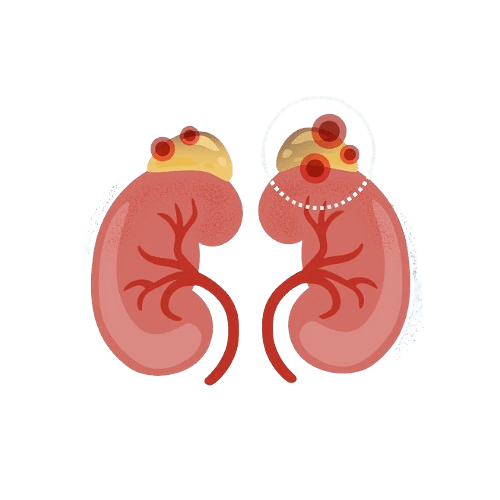
Overview
Adrenal cancer arises from the adrenal cortex and can be functional (hormone-secreting) or non-functional.
Functional tumors cause clinical syndromes (Cushing’s, virilization) while non-functional tumors often present late with mass effect or metastasis.
Early detection and complete surgical excision offer the best chance for cure; multidisciplinary care includes endocrine evaluation and consideration of mitotane or systemic therapy for advanced disease.
Overview And Clinical Background
Biology and clinical significance
Adrenocortical carcinoma is an uncommon but aggressive malignancy of the adrenal cortex.
Tumors may overproduce cortisol, androgens, or aldosterone, causing systemic endocrine disturbances that prompt investigation.
- Origin: Malignant transformation of adrenal cortical cells.
- Functional status: May secrete hormones leading to Cushingoid or virilizing features.
- Incidence: Rare — requires high suspicion when adrenal mass and endocrine changes coexist.
Symptoms, Signs And Presentation
Functional tumors cause hormonal syndromes (weight gain, hypertension, hirsutism), while non-functional tumors may present with abdominal pain or incidental imaging findings.
Systemic symptoms appear with large or metastatic disease.
- Hormonal signs: Cushing’s features, new-onset severe hypertension, or virilization.
- Mass effect: Flank pain or fullness from a growing adrenal mass.
- Advanced disease: Weight loss, anorexia, or metastatic symptoms.
Diagnosis Methods And Investigations
Hormonal assays and imaging
Workup includes biochemical testing for cortisol, androgens, and aldosterone plus high-resolution imaging to characterize the mass.
PET/CT and biopsy in select cases help stage disease.
- Hormone testing: Overnight dexamethasone test, serum cortisol, and adrenal androgens.
- Imaging: CT or MRI to assess size, invasion, and metastatic spread.
- Staging: PET/CT and lab markers guide surgical planning and systemic therapy decisions.
Treatment Options And Surgical Techniques
Complete surgical resection (adrenalectomy) is the cornerstone for localized disease.
Adjuvant mitotane therapy or systemic chemotherapy is considered for high-risk or advanced tumors.
- Surgery: Open or laparoscopic adrenalectomy depending on tumor size and invasion.
- Medical therapy: Mitotane for adrenolytic control; systemic chemo for unresectable disease.
- Endocrine support: Perioperative hormone management and long-term endocrine follow-up.
Recovery, Risks And Prognosis
Prognosis depends on stage at diagnosis; complete resection offers the best outcomes.
Risks include surgical complications and endocrine imbalances that require vigilant follow-up and replacement therapies when needed.
Why Choose Us
CureU Healthcare provides integrated endocrine-oncology services with surgical expertise, precise hormonal testing, and multidisciplinary planning for perioperative and adjuvant care.
We prioritize safe complete resection and tailored systemic therapy when necessary.
Conclusion
Adrenal cancer is rare but treatable when caught early and managed by an experienced multidisciplinary team.
Timely surgery and targeted follow-up maximize the chance of durable control.